ten thinks to do so that you will live longer and hapilly

 Image result for live long


1. Control stress. Very few things age us faster than stress, especially chronic stress. Have you ever noticed how quickly presidents age while in office? We all have stress in our lives, and in small doses it can even be beneficial. But when stress is part of our everyday comings and goings, it begins to take its toll. While we will never eliminate stress, there are things we can do to reduce it — some included below.
2. Manage your blood pressure. Hypertension is a very common problem in our society. High blood pressure can do real damage to your body and place you at increased risk for stroke and vascular disease. Think of your blood and its circulation through your body as plumbing in your house. If the water pressure gets too high it can burst a pipe — the equivalent of a stroke in your body. If it remains high all the time, it will place undue wear and tear on the pipes shortening their life — the equivalent of atherosclerosis (hardening of the arteries) in your body.
The good news is that high blood pressure is controllable if recognized and managed properly. It is important to check your blood pressure regularly and keep it under good control. Diet, exercise and a healthy, low-salt diet can all help.
3. Don't smoke. This is pretty much a no-brainer. Almost all of us understand thats mooking  causes significant heart and lung disease. But did you know that it also accelerates aging, especially of the skin?
(MORE:Leonard Nimoy's stop smoking message 
There is absolutely no doubt it will shorten your life and probably the lives of those around you who breathe in the second-hand smoke. If you do smoke and have been unsuccessful in quitting, don’t beat yourself up. Quitting smoking is one of the hardest things to do. So don’t give up. Most people who have been successful have required several attempts. Mark Twain once said, “Quitting smoking is one of the easiest things to do….and I should know, I’ve done it a thousand times.”
4. Get your sleep. OK, wake up. This is really important. Sleep may be one of the most underappreciated aspects of good health. Why do we need sleep? Sleep in many ways has remained a scientific mystery. What has been discovered recently is its profound effect on overall health. Even more fascinating is its importance for maintaining a healthy memory — something many of us worry about as we get older. It is now known that sleeps helps embed in our brain the things we learn during the day.
So how much sleep do we need? At least seven to eight hours each night. That’s a challenge for many of us, but it should always be our goal. Sleep is not just important for memory. Having a lifestyle that lacks adequate sleep can increase blood pressure, cause depression and ultimately shorten life.
(MORE:cant sleep at night?look at you day
A good tip for getting better sleep is to cut out the caffeine in the late a fternoon and at night. Caffeine stays in our body for many hours after ingestion. So eliminate that last cup of coffee after dinner or switch to decaf.
5. Maintain good nutrition. Most of us know which foods are good and bad for us. The best advice about nutrition is not to make your self miserable eating foods you don’t like just to lose weight or stay healthy. Food is one of the basics joys of life. So eat the foods you love but be smart about portions. Most importantly, eat a varied diet that includes lots of vegetables and fruits. Most of us eat the same food over and over again. Be honest, when you go grocery shopping, aren’t you putting the same things in you cart each visit? Be adventurous. Try something new now and then. A varied diet is a healthy diet.
6. Exercise your body. Move. Just move. If you want to keep your muscles and bones young, it means using them. Find an activity you enjoy. If you don’t enjoy the activity, you will not stay with it. If you hate running on a treadmill, don’t do it. If you love tennis, play tennis. It can even be just walking, but commit to doing it regularly. Move.
7. Exercise your brain. Your brain is amazing; your brain is you. It defines who you are. Your brain holds every memory and emotion of your life; it gives you the ability to laugh, cry, create, to appreciate art/music and even the capacity to love. Every effort should be made to keep your brain young and healthy. Aside from the other recommendations listed here, the best way to keep you brain healthy is to use it. Keep your brain challenged, especially with new things. Replace routine with new learning. Seek out new experiences. Your brain thrives on challenges and learning. So be a student for life.
8. Stay positive. There is a saying: “The me I see, is the me I’ll be.” If you choose to see yourself as old and failing, you’ll likely carry yourself that way. The key word is “choose.” You have a choice with how you see everything in life, including yourself. Even circumstances outside of your control can be managed positively with proper attitude. If you are stuck in traffic, getting upset or angry will not help to get the traffic moving. You can choose instead to accept the moment and perhaps think, pray or listen to some music. Allowing yourself to get stressed and increasing your blood pressure will not help to keep you young and healthy. See tips one and two.
9. Maintain close relationships. The hurt of loneliness and isolation goes beyond emotional pain — it is terrible for our health. It is so important to have others around us. Things, of course, change as we age — children move away, we sometimes lose friends. But we can go out andMEET NEW PEOPLE   Stay involved with others. Take classes. Volunteer. Take someone out to dinner at a new restaurant. Even get a pet. Studies have shown that people live longer and healthier with companionship. Many years ago I shared with my dad the fact that married people generally live longer than single people. He suggested humorously to me that when you’re married you don’t live longer — it just seems longer.
10. Be spiritual.  The 17th century philosopher, Pascal, once said, “All of humanity’s problems stem from man’s inability to sit quietly in a room alone.” Our body, mind and spirit need moments of quiet reflective peace — probably more so today than at any time. It can be prayer, meditation or just peaceful silence. The power of such moments should not be underestimated. They help to calm and comfort and clarify our busy lives.@nic jience

Five Ways to Reduce Heart Attack Risk by 80 Percent

Image result for HEART DISEASEIf you could do five things to reduce your heart-attack risk by 80 percent, would you take a step to start on this path? That's a challenge posed by NANCY K. SWEITZER ND,phD   director of the UA Sarver Heart Center and chief of cardiology. She cites a study from Sweden’s Karolinska Institute, which observed 20,721 healthy Swedish men, ages 45 to 79, for 11 years. The study, published in Journal of the American College of Cardiology, noted that men could reduce their heart attack risk by 80 percent if they made five lifestyle changes. “I believe these also apply to women and Americans,” said Dr. Sweitzer.

Here's how these changes stack up:
  • 36 percentage risk reduction attributed to not smoking.
  • 18 percent reduction for eating a diet rich in fruits, vegetables, legumes, nuts, reduced-fat dairy products, whole grains and fish.
  • 12 percent reduction for maintaining a waistline of 37 inches or less (for men). (For women, this waistline circumference would be about 35 inches or less, said Dr. Sweitzer.)
  • 11 percent reduction for drinking fewer than two alcoholic drinks per day. (Probably one drink per day for women.)
  • 3 percent reduction for moderate daily and weekly exercise routines.
  • 1 percent – the percentage of study participants who exhibited all five of the healthy habits.
Why don’t more people follow all five of these lifestyle choices? “It can be overwhelming if people feel they need to make all of these changes at once,” said Dr. Sweitzer. “Everyone could look at where they can make the biggest impact on their risk reduction and start with one small change.” The biggest potential impact, if you smoke, stop!
What could we save if more of us make these lifestyle choices?
  • 600,000 – The number of Americans who died from heart disease during 2013. That’s 1 in every 4 deaths, according to the Centers for Disease Control and Prevention. Heart disease is the leading cause of death for men and women.
  • 380,000 – the number of people who die from coronary heart disease, the most common type of heart disease; it is caused by a blockage in the coronary artery.
  • 720,000 – the number of heart attacks each year in America.
  • $108.9 billion – the costs of coronary artery disease alone, including health care services, medications and lost productivity.

TEN STRICKING Tips to Prevent Heart Disease And Stroke

Image result for HEART DISEASE1. Take responsibility for your health.
Cardiovascular disease is the major cause of death in America, accounting for 34 percent of deaths, many suddenly and almost all of them premature. This is down from 40 percent just four decades ago, mainly due to treatment of common risk factors. If you have diabetes, your risk increases dramatically. The best prevention against heart disease and stroke is to understand the risks and treatment options. The greatest risk is ignorance or misinformation. The first step is to take responsibility for your health.
2. Know your risks.
The most influential risk factor for cardiovascular disease is age – the older you are, the greater your risk. The second is your genetic make-up. Although everyone is excited by the scientific progress in genomics research, conclusive gene tests are still in their infancy. But, as I tell our medical students, “A good family history is a poor man’s gene test.” We have long known that if your parents, grandparents, or other relatives were afflicted with or died of heart disease, diabetes or stroke, your risk is much greater.
3. Don’t smoke or expose yourself to second-hand smoke.
The evidence is overwhelming that cigarette smoking and second-hand exposure to smoke increases the risks of heart disease, lung disease, peripheral vascular disease and stroke.
4. Maintain a healthy blood pressure.
High blood pressure, called hypertension, is known as “the silent killer” as it goes without symptoms in most individuals. High blood pressure causes wear and tear of the delicate inner lining of your blood vessels. The higher your blood pressure (BP) the greater your risk. The risk begins to increase from a pressure of 115/70 mmHg and doubles for each 10 mmHg increase in systolic (the larger number) and 5 mmHg increase in the diastolic (the smaller number). Heredity and increasing age raise the risks. Measuring blood pressures at home reflects more accurately your risk than having the blood pressure taken at a physician’s office. It is worth the investment to get a cuffmeter.
It is best not to rely only on the readings at your doctor’s office as some individuals suffer from “white coat” hypertension – their BP is up only when they are at the doctor’s office. Others have “masked” hypertension – higher when not in the doctor’s office. Prognosis is best related to home BP. But for home blood pressure readings, you should not use finger or wrist units – only regular upper arm units.
5. Monitor your cholesterol (blood lipids).
Abnormal or high blood lipids (fats) are a major contributor to cardiovascular disease. Your blood lipids include the LDL (bad cholesterol; remember as “Lousy cholesterol”), HDL (good cholesterol; remember as “Healthy cholesterol”) and triglycerides. The lower your LDL and the higher your HDL, the better your prognosis. The amount of cholesterol in your blood is determined mainly by three factors: the amount produced by the liver (this is largely genetic), the amount absorbed from the intestinal tract (some from what you eat, but a lot more from cholesterol produced by the liver and excreted into the digestive tract) and, finally, age – your cholesterol increases with age. If you are at risk, medication is almost always necessary to lower the LDL or to raise your HDL. The ideal ratio of total cholesterol divided by HDL cholesterol is 3.0. If higher, you might need diet as therapy. The problem with diet is that, in general, it can only decrease total blood cholesterol by about 10 percent. If you have a strong family history or elevated Lp(a) (a rare abnormal cholesterol that increases the risk), drug therapy is usually needed.
6. Limit your calories.
Fad diets do not work. If any of them did, we all would be on THAT one, wouldn’t we? The obesity rate in Americans is alarming, contributing to a near epidemic of diabetes, which is a cardiovascular disease. If you have diabetes, your risk is the same as someone who already had a heart attack. Obesity is caused by consuming more calories than your body burns. Abdominal obesity is the major risk. Portion sizes and the amount of sugars in the American diet have dramatically increased over the past few decades. At the same time, the daily amount of exercise has been decreasing. It is good advice to “drink slim” (water, tea, coffee). Use portion control before you start eating and push away from the table before you are “full.”
7. Make exercise a daily habit.
The lack of exercise is contributing to the obesity epidemic in Americans. Studies indicate that walking two miles a day is optimal for overall health, and those two miles of walking do not have to be done all at once. Exercise does more than burn calories; it also activates genes that are beneficial to health in other ways. Plus, exercise is one of the best treatments for depression and anxiety. However, exercise alone cannot control or reduce your weight – you must also modify your diet.
8. Pick your pills wisely.
There is a great interest in alternative medicine and understandably so, because patients want to be empowered to take responsibility for their own health. However, many take alternative medicines because of the way they are marketed. The mere fact that a substance is “natural” does not prove its health benefit. After all, nobody in their right mind would take arsenic simply because it is “natural.” It is important to know that research data are often lacking for alternative medications, supplements and vitamins, none of which are regulated by the U.S. Food and Drug Administration (FDA).
Do we ever prescribe alternative medicines? On occasion we do! The major risk with many alternative medications is that the patient thinks they are doing something to improve health, when in fact they are not. Although some vitamins have been shown to possibly help some conditions, to date none have been shown to decrease the risk of cardiovascular disease. There are some rare exceptions, such as fish oils and niacin (vitamin B). It is also important to note that high doses of some vitamins may interfere or counteract the beneficial effects of some prescription drugs.
9. Reduce stress.
Stress contributes to cardiovascular disease and, if severe, can cause a heart attack or sudden death. There are plenty of options that help reduce stress, such as regular exercise, adequate sleep, striving for a good marriage, laughing, volunteering or attending religious services. Watching TV generally does not relieve, but can aggravate stress. Also, try to avoid situations and people who make you anxious or angry.
10. Stay informed: Science changes constantly.
The only constant is change. This is especially true in medicine as new techniques and new insights develop constantly. Do not believe every piece of “scientific information” you find in the media or advertisements. An overwhelming number of research studies that make it into scientific publications are poorly designed or yield data that are not representative, e.g., due to a lack of a sufficient number of participants. Keep in mind that many studies are financed or sponsored by individuals or companies with a vested interest in gaining favorable results. The situation can be especially confusing when scientific studies yield different or even contradicting results, and this happens quite often.
 

DRUGS SIDE EFFECTS

Image result for DRUGA side effect is usually regarded as an undesirable secondary effect which occurs in addition to the desired therapeutic effect of a drug or medication. Side effects may vary for each individual depending on the person's disease state, age, weight, gender, ethnicity and general health.


Side effects can occur when commencing, decreasing/increasing dosages, or ending a drug or medication regimen. Side effects may also lead to non-compliance with prescribed treatment. When side effects of a drug or medication are severe, the dosage may be adjusted or a second medication may be prescribed. Lifestyle or dietary changes may also help to minimize side effects
SO PLEASE WATCH OUT''@NIC JIENCE Image result for DRUGASK YOURSELF WHERE THATCOLOUR AND PLASTIC IS GOING TO? THEY ARE JUST MENT TO DESTINGUISH FROM OTHER DRUGS.......................

Will I recover from my heart attack?


View an animation of a heart attack. (opens in new window)


The answer is most likely yes. The heart muscle begins to heal soon after a heart attack and usually takes about eight weeks. Scar tissue may form in the damaged area, and that scar tissue does not contract or pump as well as healthy muscle tissue. That means that extent of damage to the heart muscle can impact how well the heart pumps blood throughout the body. The degree of loss of function depends on the size and location of the scar tissue. Most heart attack survivors have some degree of CORONARY ARTERY DISEASE (CAD) and will have to make important lifestyle changes and possibly take medication to prevent a future heart attack and lead a full, productive life.
illnessIt is so easy to identify oneself with the chronic illness one is afflicted with, especially if it happens to be a serious mental illness. "I am a Schizophrenic" or "I am a Bipolar" and so on. Why does this happen? How do we lose our identities, and allow our illnesses to 'own' us?
There is a vast difference between physical and mental illnesses in the way they impact our thought processes, our belief systems and our spirits. Despite severe handicaps that physical illnesses impose upon us, they do not necessarily de-motivate us. Of course, in severe chronic illnesses such as arthritis, having to endure pain for years depresses a person. However, that brings in an element of mental illness in it.
I have personally battled both physical and mental illnesses: Asthma which has threatened my life on a number of occasions and Bipolar Disorder. I have bravely endured Asthma for over four decades and it has now lost its hold on me. The suffering it caused me with all those nights that I had to sit up wheezing and coughing...only a fellow asthmatic would understand how terrible it can be. Despite this, I can safely aver that decades of pain and uncertainty did not affect my morale, motivation or my mental strength for an extended period.
On the other hand, when Bipolar Disorder struck me, it took the wind out of my sails. I was totally lost, without a clue about how I would arise from the pit I found myself in. It virtually broke my back without there being serious physical suffering involved. Stigma is the first and biggest enemy. I think it is also partly internalised. "What will people think? How will they react?" The vacuum of peer support in India creates isolation that is scary. Many experience shame too. While shame spared me, I was weighed down by guilt and helplessness. That I was now a liability on my family. And fear. "How on Earth would I make a living and sustain my family?"
There is also the more direct upheaval the mind goes through because of the dreaded illness. This whirlpool of emotions was not a passing phase. It had me in its grip over for years. Before I knew it, I became a Bipolar. My identity was snatched from me. From my day's routine to my future plans were all undermined by the moods of Mr. Bipolar. My mental strength and self belief in tatters, I became a victim. The transition to stability was a long, difficult climb. It was also a period of fantastic learning. Our most difficult times are the times during which we grow the most as human beings. I had to draw upon all my inner strength to deal with the crisis I found myself in. I feel this expanded my reservoir of resilience and I shifted to the mode of acceptance.
A turning point was my interaction on global peer support sites. I read about all the suffering my peers were enduring and it became crystal clear to me that very few had been able to cope as well I had managed to. I had indeed been fortunate that I could at least live a disciplined life and manage to get some work done. Along the way, I realised that there was so much more to me. This learning got cemented when I opened up and began blogging about my condition. It was a pivotal moment: as my readers wrote back to me seeking advice and took inspiration, the Mr. Bipolar (victim) became the observer. I do not claim I have reclaimed my pre-bipolar days glory.
My obsession from worrying about whether I could be cured has given way to a pragmatic approach: as far I can live a normal life, why should I care? I am among the happiest people you'd find! All things being equal, I would not want to change anything and am glad that I now have this glorious opportunity to reach out to my community.
And I am no more my illness!
(c)DR. Vijay Nallawala

Ebola study to examine long term effects in survivors commences in Liberia

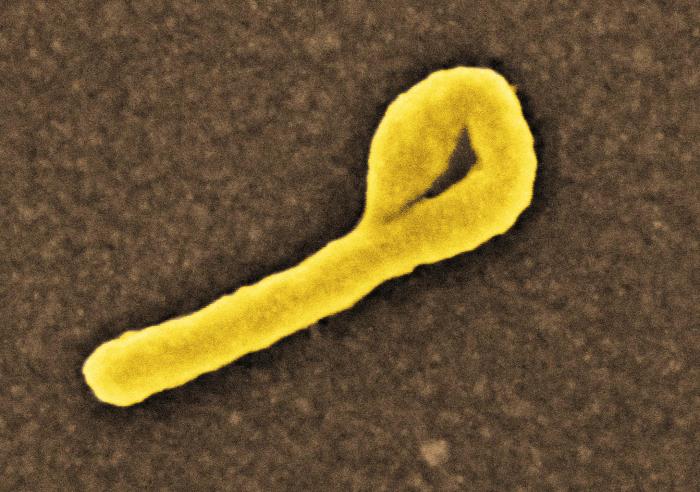
Produced by the National Institute of Allergy and Infectious Diseases (NIAID), under a very-high magnification, this digitally-colorized scanning electron micrograph (SEM) depicts a single filamentous Ebola virus particle that had budded from the surface of a VERO cell of the African green monkey kidney epithelial cell line.The Liberia-U.S. clinical research partnership known as PREVAIL has launched a study of people in Liberia who have survived Ebola virus disease (EVD) within the past two years. The study investigators hope to better understand the long-term health consequences of EVD, determine if survivors develop immunity that will protect them from future Ebola infection, and assess whether previously EVD-infected individuals can transmit infection to close contacts and sexual partners. The study, sponsored by the Ministry of Health of Liberia and the National Institute of Allergy and Infectious Diseases (NIAID), part of the National Institutes of Health, will take place at various sites in Liberia and is expected to enroll approximately 7,500 people, including 1,500 people of any age who survived EVD and 6,000 of their close contacts.
Produced by the National Institute of Allergy and Infectious Diseases (NIAID), under a very-high magnification, this digitally-colorized scanning electron micrograph (SEM) depicts a single filamentous Ebola virus particle that had budded from the surface of a VERO cell of the African green monkey kidney epithelial cell line.
“The clinical course of Ebola virus disease is reasonably well-understood, but we still have much to learn about the long-term health effects of the illness in those who recover,” said NIAID Director Anthony S. Fauci, M.D. “To unravel the many unknowns, we have expanded the focus of our partnership with Liberia’s Ministry of Health to include research on the long-term health effects of Ebola virus disease, in addition to our ongoing efforts to find an effective preventive vaccine and treatments for Ebola virus disease.”
Mosaka Fallah, Ph.D., M.P.H., former Ebola emergency-response program manager for Action Against Hunger–Liberia; Michael C. Sneller, M.D., from NIAID’s Laboratory of Immunoregulation; and Desmond Williams, M.D., Ph.D., from the U.S. Centers for Disease Control and Prevention, will serve as principal investigators for the study. Investigators from NIH’s National Eye Institute, the Johns Hopkins University Wilmer Eye Institute, Baltimore; the Ministry of Health of Liberia and the John F. Kennedy Medical Center in Sinkor, Monrovia, will also collaborate on the research. Enrollment began today at the John F. Kennedy Medical Center, and the study will open at the following sites later in June: C.H. Rennie Hospital in Kakata, Duport Road Clinic in Paynesville, and Redemption Hospital in Monrovia. Additional sites in Liberia are expected to join the study in the future.
Participants who test positive for HIV infection during the course of the study will be counseled and referred to treatment in accordance with standard medical practice in Liberia.
Study participants will undergo a medical history and physical and vision examination and have blood samples collected so researchers can identify and track any health issues, monitor organ and ocular function and record Ebola antibody levels. Some participants may also be asked to provide samples of bodily fluids, such as sweat, tears, and for adults, semen or cervical secretions. Participants will be asked if they would like to identify up to five close contacts (household members at the time of Ebola diagnosis and sexual partners after recovery from Ebola virus disease). Close contacts who agree to participate in the study will undergo a physical examination, have blood samples taken, and asked to complete a questionnaire detailing their contact with the Ebola survivor, such as touching, sleeping in the same bed and sexual intercourse. Staff from the NIH’s National Eye Institute have helped establish a new eye clinic at John F. Kennedy Medical Hospital, where ophthalmologists from NEI and Johns Hopkins will be evaluating study participants and their identified close contacts for visual problems. Treatment will be provided by Liberian ophthalmologists partnering in the study.
“There have been reports of inflammatory eye disease and vision loss among Ebola survivors,” said NEI Clinical Director Frederick Ferris, M.D. “Our goal is to determine the incidence and extent of Ebola-related eye disease among survivors, risk factors contributing to its development, and optimal treatment strategies.”
The research team will follow the Ebola survivors and their close contacts for up to five years with study visits occurring every six months. At each follow-up visit, participants will undergo a physical examination and additional blood draws, to allow study physicians to monitor and characterize any changes in Ebola antibody levels and to detect the presence of select medical conditions. This information will help scientists determine the evolution of Ebola antibodies and will provide insight on whether survivors can still transmit the virus and if so, whether these people get sick with Ebola virus disease.
Using data collected at these site visits, the researchers will calculate the incidence, prevalence and risk factors for various health issues experienced by survivors, such as vision problems; immune system changes; mental disorders; joint pain; diabetes; hypertension; and pregnancy complications. Close contacts will be used as a control group to assess whether the risks of these conditions are the same or different from those who have not had Ebola virus disease.
PREVAIL, or the Partnership for Research on Ebola Virus in Liberia, is a clinical research partnership between the U.S. Department of Health and Human Services and the Liberian Ministry of Health. The new study, an Ebola natural history study known as PREVAIL III, is one of three research projects launched by the partnership. In February 2015, PREVAIL initiated two other Ebola clinical studies. PREVAIL I is a clinical trial to assess the safety and efficacy of two experimental vaccines to prevent Ebola virus infection. A total of 1,500 participants continue to be followed in the Phase 2 segment of this study. PREVAIL II is a clinical trial designed to obtain safety and efficacy data on various investigational drugs for the treatment of Ebola virus disease. The trial is ongoing in Liberia, Sierra Leone and the United States